
What we do
When the conversation matters, bring expertise into the room.
Workshops, leadership programs, facilitated dialogue and long-term capability-building for organisations facing difficult questions. We start from your situation, never a pre-packaged course.
Most people already know what good communication looks like. The hard part is doing it when they feel criticised, misunderstood or under pressure. That’s the gap we close.
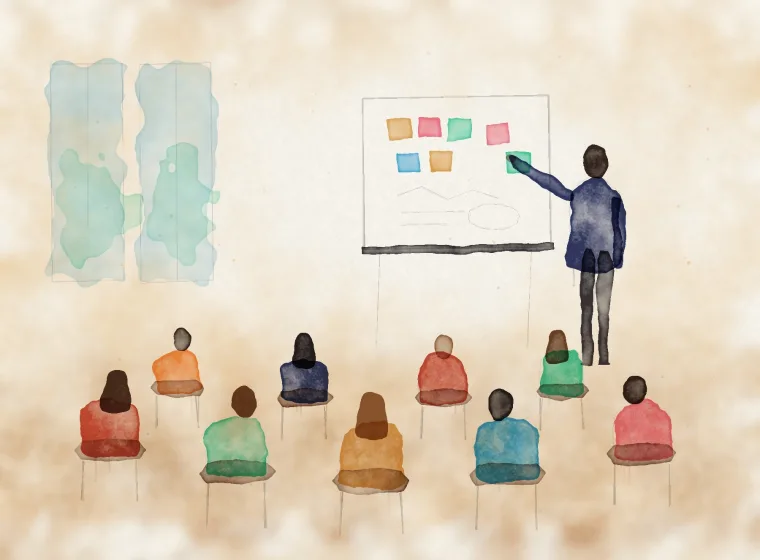
Workshops that hold under pressure
What happens when someone challenges a belief you hold strongly?
When a discussion turns heated, or nobody is willing to speak?
Our workshops recreate those moments and give people the chance to practise responding differently. Drawing on research into reasoning, uncertainty and social identity, we use realistic scenarios and facilitated exercises to build skills participants use the next day:
- recognising defensiveness, their own included
- asking questions that reveal rather than assume
- disagreeing clearly enough to be understood
We calibrate the challenge to the room. A session for a board looks nothing like one for frontline staff or community leaders.
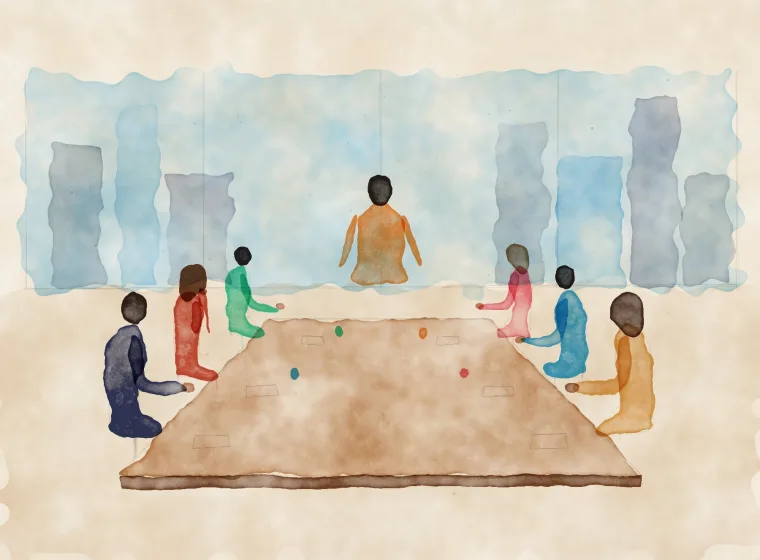
Leadership teams and boards
A leadership team thinks only as well as its members can question one another.
Who challenges a decision here? Which views make it to the table? What happens when a junior colleague spots a problem, or when a leader needs to reverse a position in public?
We work with executives, boards and senior leaders to invite scrutiny, respond to dissent without defensiveness, and exercise judgement when the evidence is incomplete and values compete. The work matters most during change, contested decisions and periods of public or internal pressure.
Two people. 83% of the talking.
Watch where the minutes go.
Illustrative. Talk is rarely shared evenly: research finds that in a typical six-person group, three people do around 70% of the talking (Thompson, 2013). In hierarchical teams it can be even more lopsided.
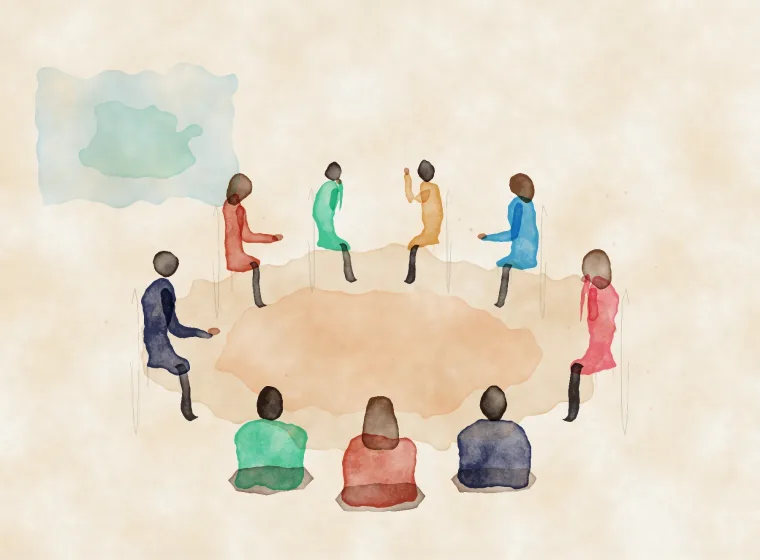
Facilitated dialogue
Some issues have become difficult to discuss before anyone enters the room.
We design and facilitate conversations where relationships, reputations or deeply held commitments are at stake: within a team, between groups with different experiences, or in public, where how an issue is discussed matters as much as the issue itself.
Preparation is everything. Beforehand, we work with you to clarify the purpose, understand the perspectives involved and design a process that suits the circumstances. In the room, we help people say what matters to them, examine where they genuinely differ and stay engaged when it gets hard. We listen for what is being said, what is still difficult to say, and whose voice hasn’t yet been heard.
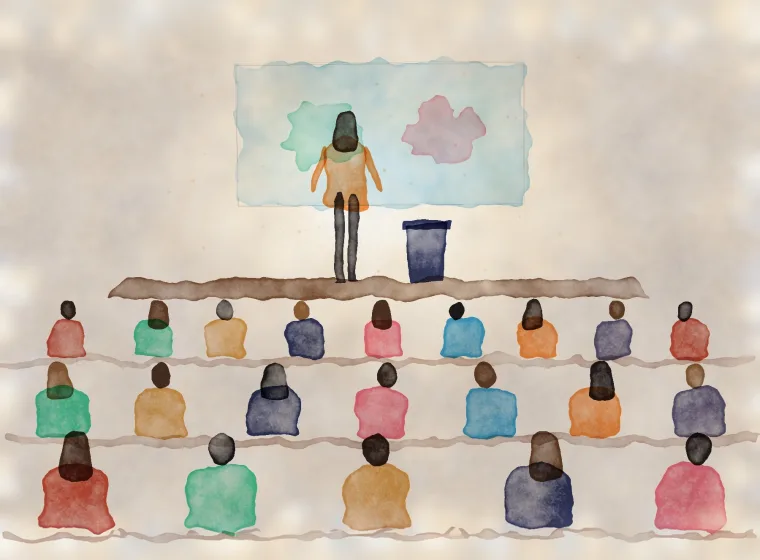
Keynotes and public conversations
For conferences, festivals and leadership events.
We speak on disagreement, identity, leadership and how people think under pressure, as keynotes, interactive sessions, moderated panels, fireside chats and live conversations between the two of us.
Audiences leave with a sharper way of seeing their own conversations, and something practical to try the next time one gets difficult.
Programs that build lasting capability
Lasting change depends on what happens after the workshop.
We build programs that connect individual skill with an organisation’s habits and expectations: working with leaders and staff at different levels, returning to a cohort over several sessions, or training the people whose roles require them to facilitate difficult discussions.
Working over time lets participants bring their experience back into the room: what they tried, where it helped and where they got stuck. Together we agree what progress looks like and how to measure it, so the capability stays as people, priorities and circumstances change.
| Time | One-off workshop | Ongoing program: coaching, mentoring and check-ins |
|---|---|---|
| Week 0 (Workshop) | 100% | 100% |
| Step 1 | 67.7% | 67.7% |
| Step 2 | 48.4% | 48.4% |
| 3 (Coaching) | 37% | 37% → 100% |
| Step 4 | 30.1% | 73% |
| Step 5 | 26% | 58.2% |
| 6 (Mentoring) | 23.6% | 50% → 100% |
| Step 7 | 22.1% | 79.2% |
| Step 8 | 21.3% | 68% |
| 9 (Check-in) | 20.8% | 62% → 100% |
| Step 10 | 20.5% | 85.3% |
| Step 11 | 20.3% | 78.3% |
| 12 | 20.2% | 75% |
Illustrative. Without practice, new learning fades fast; spacing practice over time slows the fade (Ebbinghaus, 1885; Cepeda et al., 2006).
How an engagement works
Three steps, shaped around you.
-
Understand
We start with a focused conversation about your context: what people are navigating, the responsibilities they carry and what you want the work to make possible.
-
Design
We recommend a format and scope: who should take part, what preparation is needed and how the work connects to your wider priorities.
-
Sustain
We plan for what comes next, whether that’s follow-up sessions, resources, or a way to review progress and refine the work.
Work with us