
About us
The ability to disagree well changes what is possible.
We help organisations and communities engage with the questions that matter most, especially the ones that divide them.
Why this matters
An organisation can only decide as well as its people are willing to speak and able to hear.
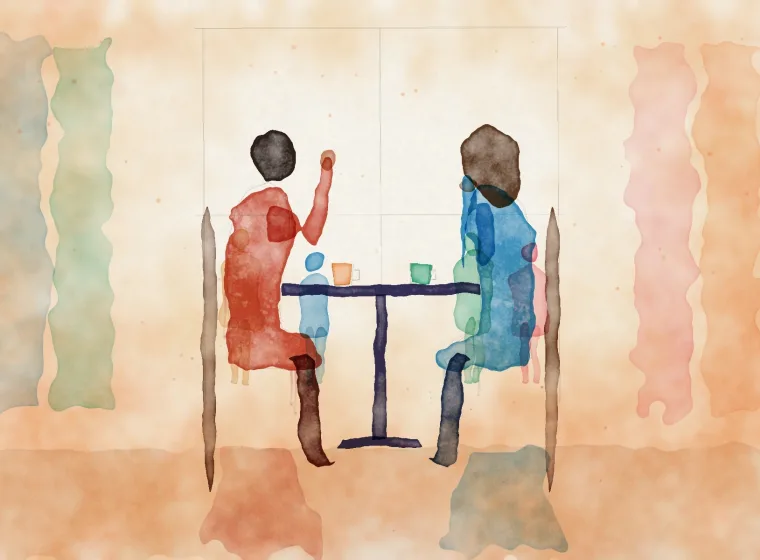
When disagreement becomes costly, people learn to keep it to themselves. Questions go unasked. Decisions escape scrutiny. Leaders hear less than they need to know, and rarely realise it.
In communities the cost runs deeper. Differences harden into assumptions about who belongs, whose experience counts and whether talking is worth it at all.
None of this is inevitable. People can learn to examine a conviction without surrendering it, admit uncertainty without losing authority, and challenge someone while staying open to being challenged back.
Those capacities matter in a team meeting, a ward round, a classroom and a public forum. They shape the kind of society we are able to build together.
What we believe
Four convictions behind the work.
-
Conviction should survive a question.
Strong beliefs deserve serious examination. We help people explain their reasoning, meet challenges to it and see what they might have missed.
-
Curiosity matters most when it’s hardest.
The moment a view unsettles us is the moment curiosity is worth the most. We help people notice when they’ve stopped listening and started preparing a reply, and choose to stay.
-
Respect has substance.
Respect means taking someone’s ideas seriously enough to test them. Politeness that steps around the substance isn’t respect. It’s distance.
-
Safety is the freedom to speak.
Avoiding a hard conversation can feel safe. It rarely is. Real safety is the confidence that you can raise a concern, or hear one, and the relationship will hold.
Our founders
The people
behind the work.
Brave Conversations is led by its co-directors, Farid Zaid and Daniel Heller, who together bring more than four decades of experience to the conversations organisations find hardest.
Their work rests on a simple observation: most conversations fail not for lack of goodwill, but for lack of skill under pressure.
-

Farid Zaid
Farid is a cognitive scientist who studies how people think, decide and disagree. His expertise sits where reasoning meets pressure: why capable people dig in, how groups drift too quickly into consensus, and what it takes to change your mind without losing face.
He turns that science into sharp, practical strategies. Farid works with leaders and teams to surface dissent early, test assumptions before they become costly and turn tense moments into better decisions. His approach draws on intellectual humility, metacognition and the productive power of discomfort, because the conversations we most want to avoid are often the ones that matter most.
An engaging and incisive facilitator, Farid has led programs across government, justice and health. He brings the same rigour to business, legal, medical and creative organisations that want cultures where people speak candidly, listen generously and decide well.
-
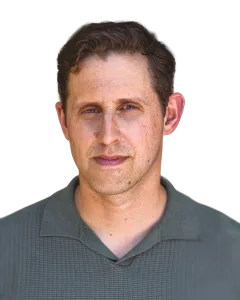
Daniel Heller
Dan is a historian whose career has taken him inside some of the most polarising conflicts of our time. A specialist in the modern Middle East, and in Israeli and Palestinian history, he understands how identity, memory and belonging shape what people believe, and why disagreements over values can feel so deeply personal.
That perspective makes Dan a trusted guide when the stakes are emotional as well as strategic. He works with organisations and communities to turn conflict into insight and build trust across divides, guiding leaders through the moments that test a culture: contested decisions, public controversy and conversations where loyalties run deep.
His work is built for any setting where people must keep working together after a hard conversation, from boardrooms and professional firms to hospitals and cultural institutions. Dan helps people stay in the room when it would be easier to walk out.
Work with us
Bring us into the conversation.
If your organisation is ready to look honestly at how it handles disagreement, we’d welcome the chance to talk.